Nutrition & Macros
What Are Macros? A Complete Guide for Women Who Train
Every result you chase in the gym depends on what happens in the kitchen. Macros are the foundation of that connection. Understanding them is not complicated once you break it down, and once you do, eating becomes a tool you control instead of a guessing game. This guide covers what macros actually are, why they matter for muscle and fat loss, and how to start setting targets that match your training based on the same approach two-time Ms. Figure Olympia Erin Stern uses with her own clients.
What Are Macros, Exactly
Macros, short for macronutrients, are the three nutrients that make up everything you eat: protein, carbohydrates, and fat. Every food is some combination of these three. Unlike micronutrients such as vitamins and minerals, which your body needs in small amounts, macros are needed in large quantities because they provide the calories your body runs on.
Each macro serves a distinct role in training and recovery, which is why tracking them, rather than just counting total calories, gives a far more accurate picture of how your nutrition supports your goals.

The Three Macros and What They Do
Macro
- Protein
- Carbohydrates
- Fat
Calories per Gram
- 4 calories
- 4 calories
- 9 calories
Primary Role
- Builds and repairs muscle tissue
- Fuels training and replenishes energy stores
- Supports hormone production and recovery
Common Sources
- Chicken, eggs, fish, Greek yogurt
- Rice, oats, sweet potatoes, fruit
- Salmon, almonds, avocado, olive oil
Macro
Calories per Gram
Primary Role
Common Sources
- Protein
- Carbohydrates
- Fat
- 4 calories
- 4 calories
- 9 calories
- Builds and repairs muscle tissue
- Fuels training and replenishes energy stores
- Supports hormone production and recovery
- Chicken, eggs, fish, Greek yogurt
- Rice, oats, sweet potatoes, fruit
- Salmon, almonds, avocado, olive oil
- Protein is the building block of muscle. Every time you train, you create small amounts of muscle damage, and protein is what your body uses to repair and rebuild that tissue stronger than before. Without enough protein, training intensity does not translate into muscle growth.
- Carbohydrates are the body's preferred energy source, particularly for strength training and high-intensity work. They get stored as glycogen in your muscles and liver, and that stored glycogen is what fuels your lifts, your sprints, and your recovery between sets.
- Fat is often misunderstood as something to avoid, but it plays a critical role in hormone production, including the hormones responsible for muscle growth and recovery. Cutting fat too low can disrupt hormonal balance, especially for women.
Why Macros Matter More Than Calories Alone
Two people can eat the exact same number of calories and get completely different results. One eating mostly protein and vegetables will build and preserve muscle. One eating the same calories from mostly processed carbohydrates and fat will likely store more body fat and recover worse from training.
This is the core reason macros matter. Calories determine whether you gain, lose, or maintain weight. Macros determine what that weight is made of, muscle or fat, and how well your body performs and recovers along the way.

How to Calculate Your Macros
While the full calculation walkthrough with real numbers is covered in our companion guide on how to calculate macros, the process generally follows four steps. Once you know your maintenance calories, setting your macros becomes a matter of simple math rather than guesswork.
Your daily maintenance calories
Your protein target based on bodyweight
Your fat target based on bodyweight
Remaining calories assigned to carbohydrates
Setting Your Macro Targets
Your ideal macro split depends entirely on your goal, whether that is building muscle, losing fat while staying strong, or simply maintaining your current physique. Protein needs stay relatively high across all three goals since muscle preservation matters regardless of whether you are gaining or losing weight. Carbohydrates and fat shift the most, with carbs typically increasing for muscle building and decreasing slightly during a fat loss phase.
A common starting point for fat loss while maintaining muscle is around 1.2 grams of protein per pound of bodyweight, 30 to 40% of calories from carbohydrates, and 25 to 30% from fat. For someone building muscle, protein stays around 1.0 gram per pound, with carbohydrates increasing to 40 to 50% of calories to fuel training.
For the full breakdown across all three goals, including the maintenance split, see our complete macro targets table in the Bodybuilding Meal Prep Guide, where these numbers are paired with a full weekly meal structure.
These ranges are starting points, not fixed rules. The right ratio depends on how your body responds, which is why tracking progress over several weeks matters more than getting the numbers perfect on day one.
Goal
Fat Loss
Muscle Building
- Protein
- Carbohydrates
- Fat
- Primary Focus
- 1.2 g per lb of bodyweight
- 30–40% of daily calories
- 25–30% of daily calories
- Preserve muscle while reducing body fat
- Building 1.0 g per lb of bodyweight
- 40–50% of daily calories
- Adjusted to meet remaining calorie needs
- Fuel training and support muscle growth
Common Macro Mistakes Women Make
Cutting fat too aggressively.
Dropping fat intake below 20% of total calories can disrupt hormone production and slow recovery, especially over long periods.
Undereating protein.
Many women significantly underestimate their protein needs. Without enough protein, training does not translate into muscle, regardless of how hard the workouts are.
Treating macros as fixed forever.
Your targets should shift as your body composition, training volume, and goals change. A plan that worked 6 months ago may not be the right plan today.
Ignoring fiber and food quality.
Hitting your macro numbers with low quality food sources still leaves gaps in micronutrients, digestion, and overall energy.
How to Track Your Macros With the Push App
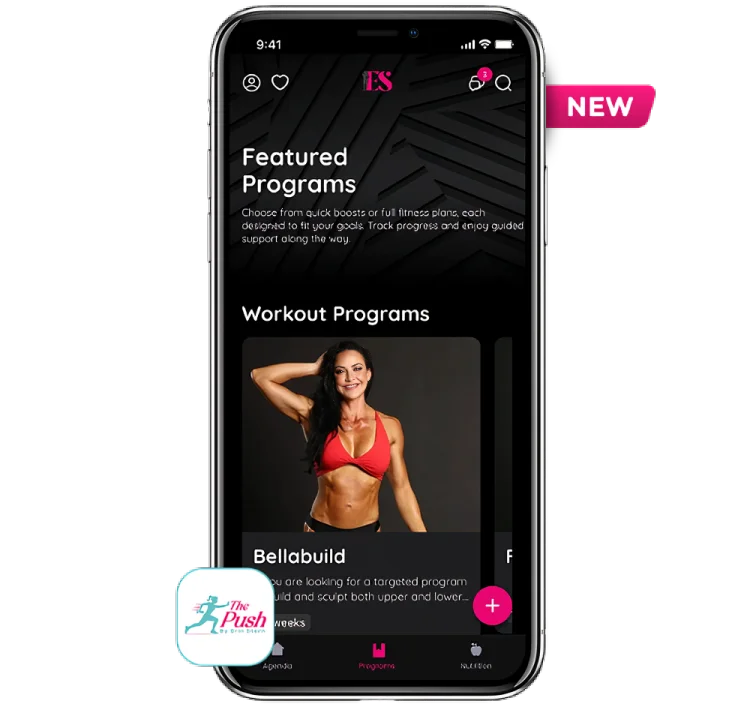
Once you understand your targets, the next step is knowing how to track macros consistently, since that is what actually makes the difference. Erin Stern’s Push App includes a built-in macro calculator to give you a personalized starting point, a food database powered by MyFitnessPal with thousands of options for logging, and a custom entry tab where you can save your own meals and re-log them on future days. You can track daily macros and calories, monitor progress through photos, and access a complete macros masterclass if you want to go deeper into the science behind it.
Start your free 7-day trial. No commitment required.
Go Deeper With Train Like a Bodybuilder
Rated 4.7 stars with nearly 1,000 reviews on Amazon, Train Like a Bodybuilder by Erin Stern includes over 60 exercises with step-by-step photography, 10 expertly crafted workouts spanning 4 to 6 days, and expert guidance on nutrition, training techniques, and supplements. It is the natural next step for putting your macros into practice inside a complete training system.
Published by DK. 192 pages.

Frequently Asked Questions
What are macros in simple terms?
Macros, short for macronutrients, are the three nutrients your body needs in large amounts: protein, carbohydrates, and fat. Together, they make up the calories in everything you eat.
Do I need to track macros to build muscle?
Tracking macros is not strictly required, but it significantly improves consistency and results, especially for women focused on building muscle or changing body composition. Without it, it is easy to undereat protein without realizing it.
What is a good macro split for fat loss?
A common starting point for fat loss while maintaining muscle is around 1.2 grams of protein per pound of bodyweight, 30 to 40% of calories from carbohydrates, and 25 to 30% from fat. This can be adjusted based on individual response.
How often should I adjust my macros?
Most women should reassess their macros every 4 to 6 weeks, or sooner if progress stalls or training volume changes significantly.
Can I eat whatever I want as long as I hit my macros?
Technically yes, but food quality still matters for energy, digestion, and overall health. Hitting macros with whole, nutrient-dense foods produces better results than hitting the same numbers with processed food.
Are macros different for women than men?
The principles are the same, but specific targets often differ due to differences in average bodyweight, hormone profiles, and activity levels. Women also tend to need a slightly higher fat percentage to support hormonal health.
Erin Stern on YouTube
Macros Videos by Erin Stern
Learn the fundamentals of macronutrients with Erin’s Macros video series. From understanding protein, carbs, and fats to calculating your daily macros and adjusting them for fat loss or muscle gain, these videos give you the knowledge to fuel your body with confidence.
More from the Diet & Food playlist:
The Perfect Post-Workout Snack
Erin Stern
What To Eat Before And After Your Workouts
Erin Stern
Why Your Diet Isn't Working | Top 5 Reasons
Erin Stern
My Top 7 Supplements to Boost Immunity
Erin Stern
Figure Out Daily Calories & Macros in Minutes!
Erin Stern
Easy Meal Prep Recipe - Healthy Chicken Nuggets
Erin Stern